How Much Money Can You Save Selling Your House As-Is in PA?

Mathew Pezon • March 31, 2026

Selling a house can feel like a math problem with too many numbers. You have to think about repairs, agent fees, closing costs, and more. But what if you could skip most of those expenses? That's where selling a house as is in PA comes into play.

An as-is sale means you sell your home exactly how it sits today. No fixing the leaky roof. No painting the walls. No replacing that old furnace. You just sell it and move on with your life.

Many Pennsylvania homeowners wonder if this choice saves them money or costs them money. The answer depends on your situation. This guide will help you do the math yourself. We'll look at every cost you avoid and every dollar you might lose. By the end, you'll know if an as-is sale makes sense for your wallet.

Repair Costs You Can Avoid With an As-Is Sale

The biggest savings from an as-is sale come from skipping repairs. Most traditional home sales require you to fix problems before buyers will make an offer. These repairs add up fast.

Let's look at common repairs Pennsylvania sellers face. A new roof costs between $5,000 and $15,000, depending on size. Foundation repairs can run $3,000 to $10,000 or more. HVAC system replacement costs around $5,000 to $10,000. Plumbing fixes might cost $500 to $5,000. Electrical updates range from $1,000 to $8,000.

You also have cosmetic updates. Fresh paint costs $2,000 to $5,000 for a whole house. New flooring runs $3,000 to $10,000. Kitchen updates can easily reach $10,000 to $30,000. Bathroom renovations cost $5,000 to $15,000 each.

Add these up, and you're looking at $20,000 to $50,000 or more for a typical fixer-upper. Some homes need even more work.

When you sell as-is, you pay $0 for repairs. Companies like Pezon Properties buy homes in any condition. They take care of all repairs after they buy. You walk away without spending a penny on fixes.

This matters most if you don't have cash sitting around for repairs. Many homeowners can't afford to put $30,000 into a house before selling it. An as-is sale solves that problem immediately.

You also save time. Repairs take weeks or months to complete. You need to get quotes, hire contractors, and supervise the work. Selling as is means you skip all that stress and delay.
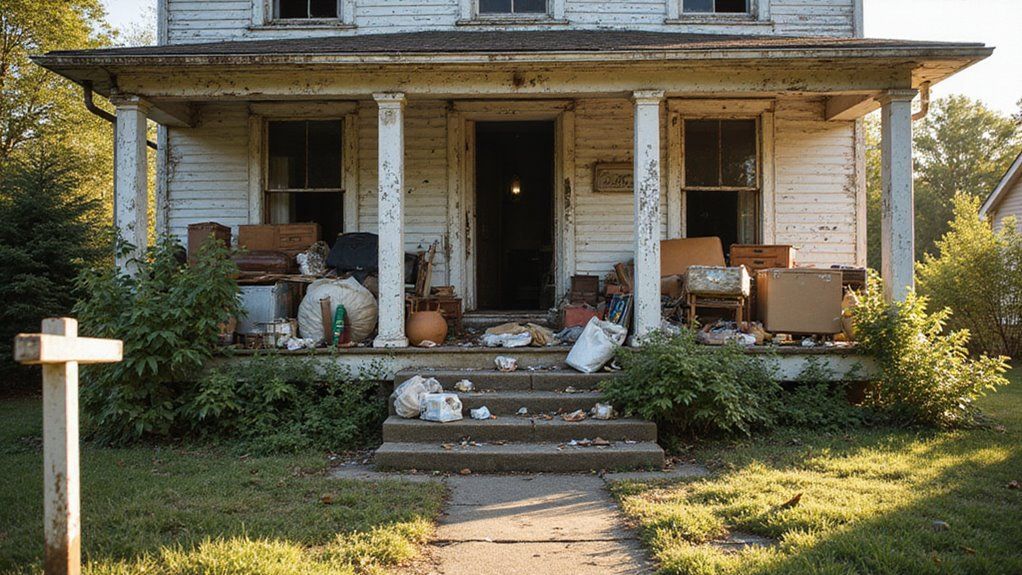
a hoarder house with junk out on the front porch

How As-Is Sales Affect Your Home's Selling Price

Here's the trade-off. You save on repairs, but you might get a lower offer. Understanding this difference helps you make a smart choice.

Traditional buyers want move-in-ready homes. They'll pay top dollar for a house that needs zero work. If your home has problems, traditional buyers will either skip it or offer much less than the asking price.

Cash buyers who purchase as-is homes factor repair costs into their offers. They know exactly what fixes cost. They subtract those costs from the house's value after repairs.

Let's use real numbers. Say your house would sell for $200,000 if it were perfect. But it needs $30,000 in repairs. A cash buyer might offer around $140,000 to $150,000. That seems like a big gap.

But wait. You need to compare net profit, not just the sale price. If you go the traditional route, you spend $30,000 on repairs to get that $200,000 price. You also pay a realtor commission of about 6%, which equals $12,000. Add in closing costs of roughly 2% or $4,000. Suddenly, you're at $154,000 after expenses.

The as-is offer of $145,000 doesn't look so bad anymore. You might actually net more money selling as is.

The price difference depends on your home's condition. A house that only needs minor cosmetic work won't see a huge price drop. A house with major structural issues will see a bigger difference. Pennsylvania homes with foundation problems, roof damage, or outdated systems typically see the largest gaps.

Location matters too. Homes in desirable Pennsylvania neighborhoods like Allentown tend to maintain higher as-is values. Buyers know they can fix the house and still have a great property.

Calculating Your Net Profit: As-Is vs Traditional Sale

Now let's do the real math. This section helps you figure out which option puts more money in your pocket.

Start with your home's estimated value in perfect condition. Look at recent sales of similar homes in your Pennsylvania neighborhood. Use online tools or ask a local realtor for a market analysis.

For the traditional sales path, subtract these costs. First, repair costs. Get quotes from contractors or estimate based on the numbers we shared earlier. Second, the realtor commission at 6% of the sale price. Third, closing costs are about 2% of the sale price. Fourth, staging and cleaning costs, usually $1,000 to $3,000. Fifth, holding costs while you make repairs and wait for a buyer. This includes mortgage payments, utilities, insurance, and property taxes. For three months, this might be $3,000 to $6,000 or more.

For the as-is sale path, the math is simpler. You get the offer amount and subtract very few costs. Most cash buyers cover closing costs. You pay no commission because there's no realtor. You spend nothing on repairs or staging. Your only costs might be any mortgage payoff and moving expenses.

Here's an example. Your home value is $180,000 if repaired. Repairs cost $25,000. Realtor commission is $10,800. Closing costs are $3,600. Holding costs for three months are $4,500. Total costs equal $43,900. Your net profit is $136,100.

An as-is offer might be $145,000 with the buyer covering closing costs. Your net profit is $145,000 minus moving costs. That's about $10,000 more in your pocket.

Every situation is different. Some homes in great shape with minor issues might net more through traditional sales. Homes with serious problems almost always net more when sold as is.

Companies like Pezon Properties can give you a free offer. Compare that to your traditional sale estimate. The numbers tell you which path makes sense.

Hidden Costs That Disappear With As-Is Sales

Beyond the obvious savings, as-is sales eliminate expenses you might not think about at first. These hidden costs add up quickly.

Inspection fees go away. Traditional sales require a home inspection that you often pay for upfront. This costs $300 to $500 in Pennsylvania. If problems show up, buyers ask for repairs or credits. You either fix issues or lower your price. Either way, you lose money.

Appraisal problems disappear, too. If a home appraises below the sale price because of condition issues, deals fall through. You waste time and might need to lower your price anyway. As-is cash buyers don't need appraisals because they don't use bank financing.

Failed sales cost money. About 30% of traditional home sales fall through before closing. Each failed sale means more months of mortgage payments, utility bills, and property taxes. You might spend $2,000 to $3,000 per month keeping a house you're trying to sell. Three failed sales over nine months could cost $18,000 to $27,000.

Real estate photography and marketing costs vanish. Traditional sales need professional photos at $200 to $400. Some sellers pay for virtual tours or drone footage. Marketing your home yourself takes time, which has value too.

Legal and disclosure headaches shrink dramatically. Pennsylvania requires sellers to complete detailed disclosure forms. If you miss something, buyers can sue you later. As-is sales include clear contracts that protect you from future liability. Buyers know they're purchasing the house with all its problems.

Storage costs can pile up, too. Many sellers move out before selling, traditionally, because staged homes sell better. You pay for temporary housing and storage for months. As-is sales close quickly, often in one to two weeks. You don't need months of storage fees.

HOA violations or code-enforcement fines stop accruing. If your property has violations, fixing them takes time and money. Traditional buyers won't close with active violations. Cash buyers often handle these issues after closing.

Utility costs during vacancy hurt your wallet. Empty homes still need heat in winter to prevent pipe damage. You pay for insurance, electricity, water, and trash service. Selling as-is means you stop paying these bills within weeks rather than months.

The total of these hidden costs often reaches $5,000 to $15,000 or more. That's real money that stays in your pocket with an as-is sale.

Pennsylvania sellers who need to move quickly find these savings especially valuable. Job relocations, inherited properties, divorce situations, and financial hardships all benefit from eliminating these costs and delays.

Frequently Asked Questions

Will I really save money selling my house as is, or is it just easier?

You can save money in many situations, especially if your home needs significant repairs. The key is comparing your net profit, not just the sale price. Add up all costs of a traditional sale, including repairs, commissions, holding costs, and hidden expenses. Then compare that to the net from an as-is offer. Many Pennsylvania homeowners discover they actually make more money selling as is because they avoid tens of thousands in expenses. The savings are real, not just about convenience. However, homes in excellent condition with minimal issues might net more through traditional sales. Run the numbers for your specific situation to know for sure.

How do I know if a cash offer for my as-is home is fair?

A fair cash offer typically equals your home's after-repair value minus repair costs, minus a reasonable profit margin for the buyer. Get your home's estimated value from recent comparable sales in your Pennsylvania neighborhood. Subtract realistic repair costs (get contractor quotes if possible). The offer should be in that ballpark. Legitimate companies like Pezon Properties will explain how they calculated their offer. Be wary of offers that seem way too low with no explanation. Get multiple offers if you're unsure. Remember to compare the net profit from a cash offer to what you'd actually keep after a traditional sale, not just the list price.

What if I'm not sure my home needs to be sold as-is?

Almost any home can be sold as is in Pennsylvania. The question isn't whether your home qualifies, but whether selling as is makes financial sense for you. Homes with foundation issues, roof problems, outdated systems, fire damage, hoarding situations, or code violations are perfect candidates. But even homes with minor issues can benefit from as-is sales if you need to sell quickly or can't afford repairs. Request a free offer from an as-is buyer. They'll evaluate your property and tell you what it's worth in its current condition. You can then compare that to your traditional sale option and choose the path that saves you the most money and stress.

Mathew Pezon

About the author

Mathew Pezon

Mathew Pezon is the founder and CEO of Pezon Properties, a cash home buying company located in Lehigh Valley, Pennsylvania. With several years of experience in the real estate industry, Mathew has become a specialist in helping homeowners sell their properties quickly and efficiently. He takes pride in providing a hassle-free, transparent, and fair home buying experience to his clients. Mathew is also an active member of his local community and is passionate about giving back. Through his company, he has contributed to various charities and causes.
By Mathew Pezon March 31, 2026
Selling your home by owner in Pennsylvania can save you thousands in commission fees. But it also means you handle every step yourself. You schedule showings, review offers, and negotiate directly with buyers. These tasks might seem scary at first. This guide will show you exactly how to do each one safely and smartly. Safe Ways to Schedule and Conduct Home Showings When you sell a house by owner in Pennsylvania, you control who comes through your door. Safety should be your top priority during showings. Always pre-screen potential buyers before scheduling a visit. Ask for their full name, phone number, and email address. A serious buyer will gladly share this information. If someone refuses to provide basic contact details, skip the showing. Consider asking for proof of funds or a pre-approval letter before the first showing. This step filters out people who are just looking or cannot actually buy your home. It also saves you time and keeps you safer. Never show your home alone. Have a friend, family member, or neighbor present during every showing. If you absolutely must be alone, tell someone where you will be and when to expect you to check in. Keep your phone charged and in your pocket. Lock away all valuables, medications, and personal documents before showings. Put away jewelry, cash, and anything small that could disappear. Secure your medicine cabinets and file drawers. Some people who tour homes are not there to buy. Keep pets in a separate room or ask a friend to watch them during showings. This keeps both visitors and animals safe. Some buyers are allergic or afraid of pets. A barking dog or curious cat can distract from your home's best features. Open all curtains and turn on lights throughout your home. Bright spaces feel more welcoming and safer. Good lighting also means fewer shadows where someone could hide. Walk through your home with buyers, but give them a little space. Stay close enough to answer questions and keep an eye on things. But do not hover over their shoulders. Most buyers feel uncomfortable making honest comments when the owner is too close. Set clear start and end times for each showing. A typical showing lasts 15 to 30 minutes. If buyers want to stay longer, that is usually a good sign. But having a set timeframe helps you stay in control. Consider hosting open houses on weekend afternoons. More people around means more safety. You can also ask neighbors to stop by during open houses for extra security.
By Mathew Pezon March 31, 2026
Selling a house by yourself in Pennsylvania can save you thousands of dollars in agent fees. But you need to know how to price it right and get it in front of buyers. This guide will show you exactly how to do both. When you sell a house by owner (called FSBO), you control everything. You set the price. You take the photos. You talk to buyers directly. But with that control comes responsibility. You need to make smart choices about pricing and marketing, or your home could sit on the market for months. Many Pennsylvania homeowners think selling by owner is too complicated. The truth is simpler than you might expect. You just need the right information and a solid plan. Let's walk through the most important steps to price your home correctly and get it noticed by serious buyers. Whether you live in Allentown, Middletown , Philadelphia, or anywhere else in PA, these strategies work. You will learn how to research your local market, where to advertise your property, how to make it look great online, and even how to get on the MLS without hiring an agent. Before we dive in, remember one thing. Selling by owner works best when you have time to learn the process and handle the details. If you need to sell quickly or want to skip the hassle, companies like Pezon Properties buy homes for cash in Allentown and the surrounding areas. But if you want to try FSBO first, keep reading.
By Mathew Pezon March 31, 2026
Selling your house without a real estate agent in Pennsylvania can save you thousands in commission fees. But you need to handle all the paperwork yourself. This guide covers every document, disclosure, and legal requirement you must follow when you sell your home as a For Sale By Owner (FSBO) in Pennsylvania. Required Seller Disclosures in Pennsylvania Pennsylvania law requires sellers to disclose known problems with the property to buyers. This protects buyers from surprises after they move in. The main document you need is the Residential Real Property Disclosure Statement. Every seller must provide this form unless specific exceptions apply. The disclosure form asks about the condition of your home's major systems. You must answer questions about the roof, foundation, plumbing, electrical system, heating and cooling, and appliances. You also need to report any water damage, pest problems, or structural issues you are aware of. Be honest on every question. If you lie or hide problems, the buyer can sue you after closing. Pennsylvania courts take disclosure violations seriously. You could pay for repairs, legal fees, and even face fraud charges in extreme cases. Some homes do not require the disclosure form. These include new construction that has never been occupied, transfers between family members, and sales from estates or foreclosures. Tax sales and court-ordered sales also get exceptions. Fill out the form as soon as you decide to sell. Give it to potential buyers before they make an offer. Most buyers want to see it during their first visit. Keep a copy for your records with the date you provided it to each interested party. If you discover a new problem after giving out the disclosure, you must update it. For example, if your basement floods two weeks after showing the house, tell the buyer right away. Create an amended disclosure with the new information. Pennsylvania also requires a lead paint disclosure for homes built before 1978. This federal law applies to all states. You must tell buyers if you know about lead paint in the home. You must also give them an EPA pamphlet about lead paint hazards. Buyers have 10 days to test for lead paint if they choose to. Working with a cash home buyer like Pezon Properties can simplify this process. They buy homes as-is and handle disclosure requirements differently from traditional buyers.
By Mathew Pezon March 31, 2026
Selling your house without a real estate agent can save you thousands of dollars. Many Pennsylvania homeowners choose this path every year. The process is called "For Sale by Owner" (FSBO). While it takes more work than hiring an agent, the money you save can be worth the effort. This guide walks you through everything you need to know about selling your house as a homeowner in Pennsylvania. You will learn the legal requirements, the steps to follow, and how much money you can keep in your pocket. What Does Selling by Owner Mean in Pennsylvania Selling by owner means you handle the entire home sale yourself. You do not hire a real estate agent or pay their commission fees. In Pennsylvania, this approach is completely legal and fairly common. When you sell FSBO in PA, you become responsible for every part of the sale. You price your home, take photos, write descriptions, and create listings. You also show the house to potential buyers, handle negotiations, and manage all the paperwork. The biggest reason people choose FSBO is money. Traditional real estate agents typically charge 5% to 6% of your home's sale price. On a $200,000 house, that equals $10,000 to $12,000 in commission fees. When you sell by owner, you keep that money. However, FSBO sales require time and effort. You need to understand Pennsylvania's real estate laws. You must price your home correctly to attract buyers. Marketing becomes your job, meaning taking high-quality photos and writing compelling descriptions. Some sellers find the process overwhelming and eventually hire an agent. Others complete the sale and feel proud of their accomplishment. The key is understanding what you are getting into before you start. Pennsylvania law allows FSBO sales but requires certain disclosures and documents . You must be honest about your property's condition. You cannot hide known problems from buyers. Breaking these rules can lead to lawsuits after the sale closes. Companies like Pezon Properties buy houses directly from owners in Allentown and the surrounding areas. This option eliminates the marketing and showing process. Some sellers prefer this route when they want speed over maximum sale price.
By Mathew Pezon March 31, 2026
Selling a house as is in PA means you sell your home in its current condition. You don't fix anything before closing. No painting, no repairs, and no updates. The buyer takes the property exactly how it sits today. This approach isn't right for everyone. But for some Pennsylvania homeowners, it's the perfect solution. It saves time, money, and stress during difficult life situations. Many people face circumstances where fixing up a house feels impossible. You might not have the cash for repairs. You might need to move quickly. Or you simply don't want to deal with contractors and renovation headaches. Understanding when as-is sales make sense helps you make smart decisions. This article walks through real situations where Pennsylvania homeowners benefit most from selling as-is. We'll also cover when making repairs might serve you better. Companies like Pezon Properties buy homes as-is throughout Pennsylvania. They help sellers in tough spots close fast without the usual hassle. Knowing your options puts you in control of your sale. Selling Inherited Property As-Is in Pennsylvania Inheriting a house sounds like a gift. But it often creates stress instead of joy. Many inherited homes sit empty for months or even years. The property might be in another city, far from where you live. It could need serious work that you can't afford or don't have time to manage. Pennsylvania inheritance laws require you to pay property taxes and maintain the home. These costs add up fast. Insurance, utilities, lawn care, and repairs drain your bank account every month. Meanwhile, the house sits empty, producing no income. Most inherited homes need updates. The previous owner might have lived there for decades without modernizing. You could face outdated kitchens, old roofing, broken furnaces, or cosmetic issues throughout the home. Fixing everything requires tens of thousands of dollars and months of work. Selling as-is solves these problems quickly . You avoid spending money on a property you never planned to own. Cash buyers purchase inherited homes in any condition. They handle the closing process while you focus on other family matters. Multiple heirs make the situation even more complex. Siblings or relatives might disagree about the timing of repairs or a sale. Selling as-is to a cash buyer removes these conflicts. Everyone agrees on a straightforward sale without renovation debates. The emotional burden matters too. Cleaning out a loved one's belongings is hard enough. Adding renovation stress makes everything worse. An as-is sale lets you move forward with dignity and less heartache. Pennsylvania probate rules allow as-is sales of inherited property. Once the estate clears probate, you can sell immediately. Cash buyers often close in two to three weeks. This speed helps you resolve estate matters and distribute inheritance funds to all heirs quickly.
By Mathew Pezon March 31, 2026
Selling a house as is in PA means you want to sell your property without making repairs or updates. You are telling buyers, "What you see is what you get." This can save you time, money, and stress. But who actually buys homes in this condition? The good news is that several types of buyers are interested in as-is properties. Some buyers prefer these homes because they get a lower price. Others see them as investment opportunities. Understanding who these buyers are will help you sell faster and get a fair price. In Pennsylvania, you have three main buyer groups to consider. First, there are cash home buyers and real estate investors. These people buy houses quickly and often prefer properties that need work. Second, traditional buyers might still be interested if the price is right. Third, companies like Pezon Properties specialize in buying homes as-is for cash in areas like Allentown. Each type of buyer has different needs and offers different benefits. Cash buyers move fast but might offer less money. Traditional buyers may pay more but take longer to close. Knowing the differences helps you make the best choice for your situation. This article will walk you through each buyer type. You will learn who they are, how they work, and how to find them. By the end, you will know exactly which path makes sense for your as-is home sale in Pennsylvania. Cash Home Buyers and Real Estate Investors in PA Cash home buyers and real estate investors are often the same people. They buy properties without needing bank loans. This means they can close deals in as little as seven to fourteen days. For sellers who need to move quickly, this speed is a huge advantage. These buyers look for houses they can fix up and resell for profit. They also buy rental properties to generate income. Because they plan to invest money in repairs anyway, they do not mind buying homes that need work. In fact, they prefer it because they can negotiate a lower purchase price. Real estate investors use a simple formula to determine their offers. They look at the after-repair value (what the house will be worth after fixes). Then they subtract repair costs and their desired profit. The result is what they can pay you. This usually means their offer is below market value, but you save money on repairs and get cash fast.
By Ammad Latif March 31, 2026
Selling your house can feel overwhelming, especially when repairs pile up and your budget runs dry. The good news? You can sell your Pennsylvania home as-is, meaning you don't make any repairs before the sale. This guide walks you through every step, from your first decision to the final closing papers. When you sell a house as-is in PA, you tell buyers up front that you won't make any repairs. The property transfers exactly as it stands today. This option works well for people facing foreclosure, inheriting a home, going through a divorce, or needing major work on a home. Instead of spending months and thousands on fixes, you move forward quickly. Pennsylvania law requires honest disclosure about your property's condition. You must tell buyers about known problems, but you don't have to fix them. This approach saves time and money while still following state regulations. The process differs from traditional sales in several ways. You'll attract different buyers, mainly investors and cash buyers like Pezon Properties. These buyers understand property challenges and close deals faster than conventional buyers who need mortgage approval. Let's break down each step so you know exactly what to expect. Preparing Your Home for an As-Is Sale in Pennsylvania Even though you're selling as-is, some preparation helps your sale succeed. Start by gathering all paperwork related to your property. Find your deed, property tax records, and any inspection reports you already have. These documents answer buyer questions and speed up the process. Next, create a list of everything that needs work. Be honest and thorough. Does the roof leak? Are there foundation cracks? Is the furnace old? Writing everything down helps you stay organized and meets Pennsylvania's disclosure requirements. Pennsylvania law requires sellers to complete a Property Disclosure Statement. This form asks about your home's condition, including structural issues, water damage, pest problems, and mechanical systems. You must answer truthfully based on what you know. If you're not sure about something, it's okay to check "unknown" rather than guess. Clean out personal belongings and trash. While buyers expect issues with an as-is property, removing clutter helps them see the home's potential. You don't need to deep clean or stage, but clearing rooms makes a difference. Haul away broken furniture, old appliances, and items you don't want. Take photos of your property's current state. These pictures protect you later if questions arise about the condition. They also help when marketing to cash buyers who may make offers without visiting the property. Consider getting a pre-sale inspection, though it's not required. Some sellers do this to know exactly what's wrong. This information helps you price fairly and answer buyer questions confidently. However, many people skip this step to save money, especially when selling to investors who do their own inspections. Secure your property if it's vacant. Lock all doors and windows. Turn off the water to prevent frozen pipes in winter. Keep the lawn mowed if possible. Basic maintenance shows you care, even though you're not making repairs.
By Mathew Pezon March 31, 2026
Selling a house can feel overwhelming, especially when your property needs repairs. You might wonder if you can skip the fixes and sell anyway. The good news is that you can. This approach is called selling as-is, and it is completely legal in Pennsylvania. Many homeowners think selling as-is means they can hide problems or walk away without any responsibility. That is not true. Pennsylvania has specific laws regarding what sellers must disclose to buyers, even in as-is sales. Understanding these rules will help you avoid legal trouble and sell your home successfully. This guide explains exactly what selling a house as-is means in Pennsylvania, what you must disclose to buyers, and what common myths you should ignore. What As-Is Really Means When Selling Your Pennsylvania Home Selling as-is means you are selling your home in its current condition. You will not make repairs before closing. You will not fix the leaky roof, replace old appliances, or update outdated plumbing. The buyer accepts the property exactly as they see it on the day of purchase. Think of it like buying a used car from a private seller. The seller tells you what is wrong, but they do not fix anything. You decide if the price is fair for a car that needs work. House sales work the same way when you sell as-is. However, as-is does not mean buyers get no information about the property. You still must tell them about known problems. Pennsylvania law requires sellers to complete a property disclosure form. This form lists issues with the home that you are aware of. You cannot hide major defects just because you are selling as-is. The biggest benefit of selling as-is is saving time and money. Repairs cost thousands of dollars and can take months. If your home needs a new roof, it might cost $15,000 or more. Updating a kitchen can easily run $20,000. When you sell as-is, you skip these expenses entirely. As-is sales work well in several situations. Maybe you inherited a house across the state and cannot manage repairs from far away. Perhaps you are going through a divorce and need to sell quickly. You might be facing foreclosure and have no money for updates. The house needs so much work that fixing it does not make financial sense. Companies like Pezon Properties specialize in buying homes as-is in Fountain Hill and throughout Pennsylvania . They purchase properties in any condition, which means you can sell fast without spending a dime on repairs.
By Mathew Pezon March 31, 2026
Life throws curveballs. Sometimes you inherit a house you never wanted. Other times, you need to step away from being a landlord. Maybe you are going through a divorce and need to split assets quickly. These situations are stressful, and traditional home sales can make them worse. The good news is that you have options. Selling your house for cash in Pennsylvania can solve these complicated problems faster than you think. Companies like Pezon Properties buy houses in any condition, which means you can move forward with your life without months of waiting. This guide explains how to sell your house fast in Pennsylvania when you are dealing with an inheritance, rental properties, or a divorce. You will learn the exact steps to take and why cash sales work better than listing with an agent for these special situations. How to Sell an Inherited House You Don't Want in Pennsylvania Inheriting a house sounds like a gift, but it often feels like a burden. You might live in another state. The house might need major repairs. Or maybe you just do not want to deal with becoming a landlord or homeowner. The first step is understanding probate. In Pennsylvania, most inherited properties go through probate court. This legal process confirms who currently owns the house. Probate can take several months to over a year, depending on the estate's complexity. You cannot sell the house until probate closes in most cases. However, you can start planning your sale during this time. Once you own the house legally, you face a big decision. Do you fix it up and list it? Or do you sell it as-is? Traditional sales require you to make repairs, stage the home, and wait for buyers. This costs money you might not have and takes time you probably want back. Cash home buyers in Pennsylvania offer a simpler path. They buy houses in any condition. Broken furnace? Outdated kitchen? Overgrown yard? None of that matters. You skip the repair costs completely. Here is what makes inherited house sales tricky: You might be sharing ownership with siblings or other family members. Everyone needs to agree on the sale. This can create arguments about price and timing. A cash buyer can often close in two to three weeks, which reduces the time for disagreements to grow. Tax considerations matter too. Pennsylvania has an inheritance tax that varies based on your relationship to the deceased. Spouses pay zero percent. Children and grandchildren pay 4.5 percent. Siblings pay 12 percent. Other heirs pay 15 percent. A cash sale helps you settle these taxes quickly instead of paying them while the house sits empty. Empty houses cost money every month. Property taxes continue. Insurance is required. Utilities might stay on. These costs add up fast. Selling quickly stops the financial bleeding. Companies like Pezon Properties can often make an offer within 24 hours of seeing your property, which means you can plan your next steps almost immediately.
By Mathew Pezon March 31, 2026
Selling your home is a big decision. In Pennsylvania, you have two main choices: work with a real estate agent or sell to cash home buyers. Each path has different costs, timelines, and benefits. This guide will help you understand both options so you can pick the best one for your situation. Many Pennsylvania homeowners don't realize how much selling through a realtor actually costs. Other people need to sell my house fast in Pennsylvania and can't wait months for the traditional process. Let's break down what you need to know about both selling methods. The True Cost of Selling with a Realtor in Pennsylvania When you list your home with a real estate agent, the costs add up quickly. Most people only think about the commission, but that's just the start. Real estate agents in Pennsylvania typically charge 5% to 6% of your home's sale price. On a $200,000 home, that's $10,000 to $12,000 right off the top. This commission gets split between your agent and the buyer's agent. But commission is only one expense. You also need to prepare your home for showings. This often means: Painting walls and trim Fixing broken items Replacing old carpet or flooring Deep cleaning every room Staging furniture to look appealing Maintaining the yard perfectly These repairs and improvements can cost $5,000 to $15,000 or more. Some homes need even bigger fixes before agents will list them. Then come the holding costs. The average home in Pennsylvania takes 60 to 90 days to sell through traditional methods. During this time, you keep paying: Mortgage payments Property taxes Insurance Utilities HOA fees (if applicable) For three months, these costs might add another $3,000 to $6,000. If your home takes longer to sell, you pay even more. Closing costs are another surprise for many sellers. You might pay for: Title insurance Transfer taxes (Pennsylvania has some of the highest in the nation at 2% in many areas) Attorney fees Home warranty for the buyer Repairs requested after inspection Pennsylvania's transfer tax alone can cost $4,000 on a $200,000 home. Add everything together, and selling with a realtor can take 10% to 15% of your home's value. That's $20,000 to $30,000 on a $200,000 property. Many homeowners are shocked when they see their net proceeds at closing. The amount you actually take home is much less than the sale price.