Your Allentown Home Has Deferred Maintenance: How That Changes Your Cash Offer Estimate
When a home needs real work, sellers want a realistic first number. A cash offer calculator can give you a starting point, but how it handles repair costs separates a useful estimate from a misleading one. If your Allentown home has deferred maintenance, understanding the math behind that estimate matters before you make any decisions.
The gap between what a house could sell for in perfect condition and what it sells for as-is isn’t just a vague discount. It follows a logic cash buyers commonly use, and knowing it helps you read any number you receive with clear eyes.
How do cash buyers factor repair costs into an offer on a distressed home?
Cash buyers don’t simply subtract repair estimates from market value and call it a day. The calculation has several layers, and each one affects your seller net sheet differently.
The starting point is the after-repair value (ARV), what the home would be worth once all needed work is complete. From there, a buyer works backward using a target margin that covers their costs, risk, and profit. The repair estimate is one piece of that backward calculation, not a line item added to an otherwise standard offer.
What acquisition formula do many cash buyers use?
A common framework looks like this:
Offer = (ARV × target percentage) − estimated repair costs
The target percentage varies with the buyer’s model, the local market, and the level of risk. A heavier renovation pushes it lower. A cosmetic-only update may allow a higher percentage.
Say an Allentown home has an ARV of $200,000 and needs roughly $40,000 in repairs. A buyer working at 70 percent would calculate $200,000 × 0.70 − $40,000, which equals $100,000. That is the offer, not the ARV. These numbers are illustrations only. Sellers who compare only to ARV without understanding this structure are often surprised by the number they receive.
Why do repair estimates vary between buyers?
Two buyers can walk through the same house and return with different offers because their repair scopes differ. One may plan a light renovation and a quick resale. Another may gut-renovate for a higher resale price. The scope drives the cost estimate, and the cost estimate changes the offer.
Keep this in mind before you run a cash offer calculator. The tool can only work with the repair information you provide or the assumptions built into it. The more accurate your own repair picture, the more useful the result.
What is after-repair value, and why does it drive the offer number?
After-repair value is the most important variable in a distressed property offer. It isn’t what your home is worth today. It is what a comparable, fully updated home in your neighborhood would sell for, and it becomes the ceiling from which everything else is subtracted.
For Allentown sellers, ARV is based on recent sales of renovated homes in similar condition. A buyer will look at homes that sold in similar neighborhoods in recent months, adjusting for square footage, bedroom and bathroom count, lot size, and finishes.
What inflates or deflates ARV in Allentown?
A few factors can shift ARV in either direction:
- Neighborhood ceiling: Even a perfectly renovated home can’t sell above what the surrounding market supports. A buyer won’t offer based on an ARV the local comps can’t support.
- Structural versus cosmetic repairs: A home needing a new roof, foundation work, or HVAC replacement costs more to repair and has a harder-to-predict ARV than one needing paint, flooring, and fixtures. Structural issues can also widen the margin a buyer needs.
- Permit history: Unpermitted work can cloud the ARV, because a buyer can’t count on those improvements being recognized in an appraisal after renovation. If your home has unpermitted additions, mention them early.
What edge case do sellers often miss?
If yours is the worst house on a good block, the ARV may be higher than you expect, because the surrounding comps are strong. If similar homes nearby also need work, the comp pool may pull the ARV down even after a full renovation. Knowing which situation fits your home changes how you read a buyer’s offer.
Can a seller net sheet still work in your favor when the house needs major work?
A net sheet built around a distressed-property offer can still show a positive outcome for the seller. Whether it does depends on a comparison many sellers don’t fully run before deciding.
The right question isn’t whether the cash offer is lower than market value. It usually will be. The right question is what you net after accounting for all the costs of the alternative.
What is the true cost of the traditional path with a distressed property?
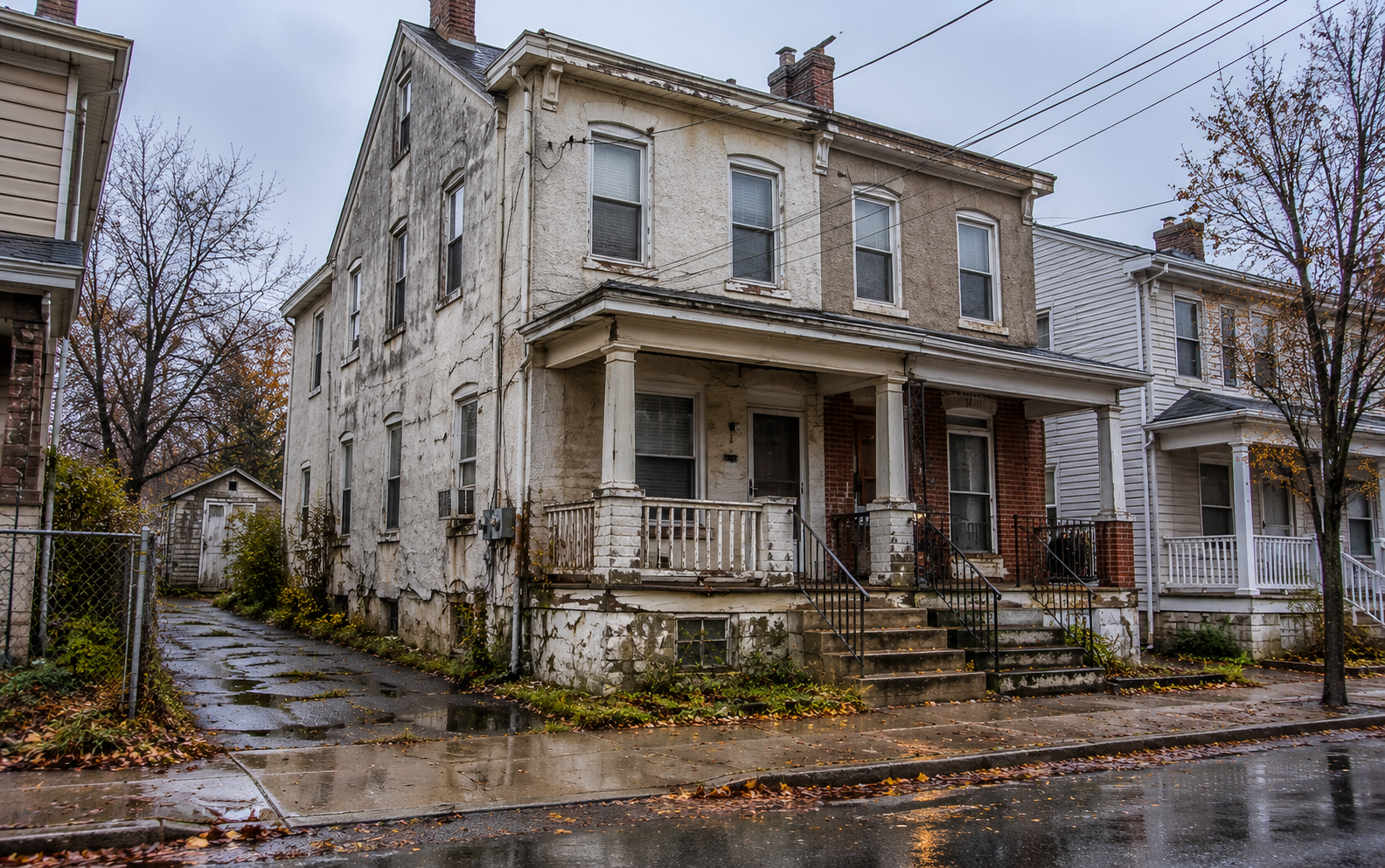
Consider a hypothetical. A homeowner in Allentown has $50,000 in deferred maintenance and receives a cash offer of $110,000. The ARV is $185,000, and the gap feels too wide.
To capture something closer to ARV, the owner would need to complete the repairs before listing or list as-is at a discount. Making repairs means spending $50,000 upfront with no guarantee of getting every dollar back. Listing as-is with an agent can mean waiting months for the right buyer, paying commission, covering carrying costs, and negotiating repair credits after inspection. If you’d rather skip that process, you can sell your house as-is to a direct buyer.
A net sheet that maps all of those costs side by side often narrows the apparent gap between a cash offer and a traditional sale. Sometimes it closes the gap entirely.
What should the net sheet include?
For an accurate comparison, the traditional-path net sheet should include:
- Agent commission
- Estimated repair costs and the realistic return on each major repair
- Property taxes, insurance, and utilities during the listing and closing period
- Buyer-requested repair credits after inspection
- Transfer taxes and title fees
With those numbers on the page, the cash offer looks different than it did on its own. If you’re comparing options, ask each of the
cash home buyers in Allentown to explain how they reached their number.
Frequently Asked Questions
How does a cash offer calculator handle repair costs for a house in bad condition?
Many calculators ask you to estimate your home’s repair condition, then apply a discount to the estimated ARV based on that input. The more detailed your repair estimate, the more accurate the output. Calculators that rely only on categories like “good,” “fair,” or “poor” use a rough proxy, not a precise number.
What is after-repair value, and how does it affect a cash offer?
After-repair value is what your home would sell for if it were fully renovated to current market standards. Cash buyers often use it as the ceiling for their calculation, then subtract estimated repairs and their required margin. A higher ARV relative to repair costs generally leaves more room in the formula, while a low ARV in a soft neighborhood limits it.
Is selling as-is to a cash buyer worth it if my Allentown home needs a lot of work?
It depends on a full net sheet comparison, not just the headline offer. When you factor in repairs, commissions, holding costs, and post-inspection credits on the traditional path, the difference between the two options is often smaller than it first appears. Ask any buyer to walk through the numbers with you so the comparison fits your situation.

About the author
Mathew Pezon
Mathew Pezon is the founder and CEO of Pezon Properties, a cash home buying company located in Lehigh Valley, Pennsylvania. With several years of experience in the real estate industry, Mathew has become a specialist in helping homeowners sell their properties quickly and efficiently. He takes pride in providing a hassle-free, transparent, and fair home buying experience to his clients. Mathew is also an active member of his local community and is passionate about giving back. Through his company, he has contributed to various charities and causes.