What Is After Repair Value and Why Does It Drive Your Cash Offer?
When sellers ask how cash home buyers calculate their offers, the answer almost always starts with three words: after repair value. Understanding this single number can turn a confusing offer sheet into something that makes complete sense.
What Does After Repair Value Actually Mean for Your Home?
After repair value, commonly written as ARV, is the estimated market value of your home after it has been fully renovated and brought up to current buyer expectations. It is not what your home is worth right now in its current condition. It is what the home could reasonably sell for once a buyer completes all necessary repairs, updates, and improvements.
This distinction matters more than most sellers realize. When you receive a cash offer, the buyer is not looking at your home the way a traditional buyer would. They are looking at a future version of your property and working backward from that projected value to figure out what they can afford to pay today.
Why ARV Is the Starting Point, Not the Final Number
ARV sets the ceiling. Everything else in the offer formula works downward from there. A buyer cannot offer you more than what they expect to sell the home for, and they need room between that ceiling and your offer price to cover renovation costs, holding costs, and a reasonable margin for their own risk.
Think of it like this: if your home would sell for a certain amount fully updated, a cash buyer has to subtract what it costs to get it there before they can land on a fair purchase price. That's where the math begins.
What Repairs and Updates Drive ARV Up or Down
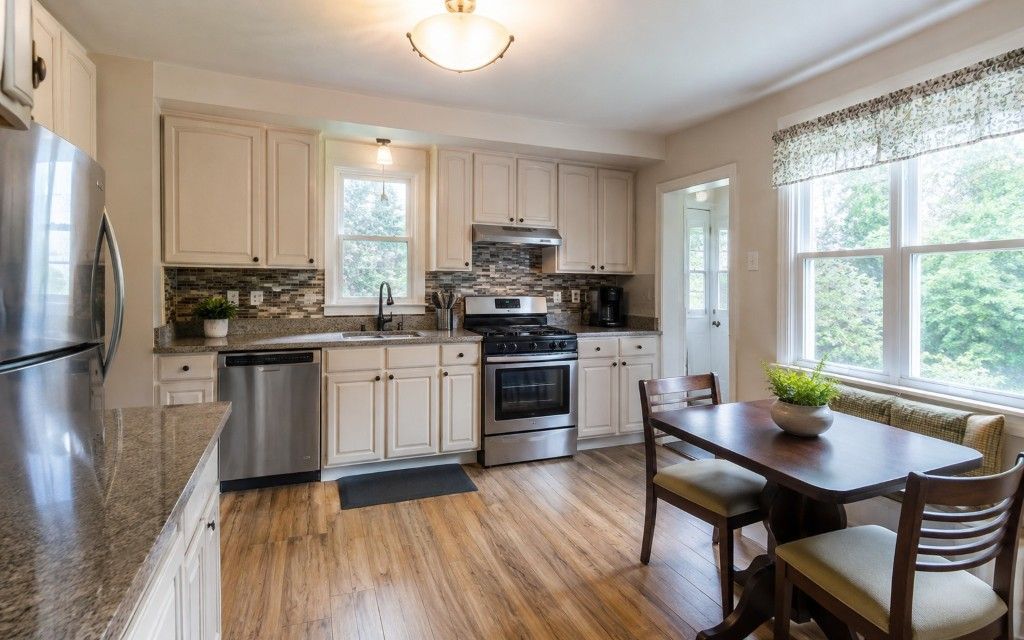
Not all renovations affect ARV equally. Kitchens and bathrooms tend to have the strongest influence on market value estimates because buyers in most price ranges weigh those rooms heavily. Roof condition, HVAC systems, and foundation integrity also matter because buyers and their lenders often flag those items during inspection.
Cosmetic issues like outdated paint, worn carpet, or older fixtures matter less individually but can add up. When a home needs attention across many areas at once, the gap between its current condition and fully repaired value widens, and that gap directly affects the offer.
How Do Cash Buyers Research Comparable Sales to Find ARV in PA?
Arriving at an accurate ARV is not guesswork. It requires careful research into recent comparable sales, often called comps, to understand what similar renovated homes in the same area have actually sold for. In Elizabethtown, PA, this research has to be hyper-local because values can shift significantly from one neighborhood to the next.
What Makes a Good Comparable Sale
A strong comparable sale shares as many characteristics as possible with your home. Buyers look for properties within roughly a half-mile radius that sold recently, typically within the last six months, though that window may stretch in slower markets. Square footage, bedroom and bathroom count, lot size, and property style all factor into whether a comp is a fair match.
Crucially, the comp should reflect a fully updated or move-in-ready condition. If a buyer is estimating what your home would sell for after renovation, they need sales that represent that finished state, not other distressed properties or homes sold as-is. Using the wrong comps would skew the entire property valuation from the start.
How Allentown Neighborhoods Affect Comps Analysis
Local market knowledge plays a major role in comps analysis. Allentown has a wide range of neighborhoods, each with its own price band and buyer pool. A renovated three-bedroom home in the West End commands a different price than a comparable home in another part of the city. Buyers who do not understand these distinctions will either overpay or underpay, and neither outcome is good for anyone involved.
We study neighborhood-level sales data carefully before arriving at any ARV figure. What a home could sell for after renovation depends entirely on what buyers in that specific area have shown they are willing to pay.
Why Cash Buyers Adjust Comps for Condition
Even among updated homes, condition varies. A comp might represent a full gut renovation while your property only needs moderate work. Buyers account for these differences by adjusting their comparable data to reflect the most realistic version of what your finished home would bring on the open market.
This adjustment process is where experience matters. Buyers who have worked in a local market for years develop a feel for which comps are most predictive and which are outliers. That judgment shapes the ARV, which in turn shapes the offer.
How Does ARV Turn Into the Final Offer Number?
Once ARV is established, a cash buyer applies a formula to determine the highest price they can reasonably pay. This is where cash home offer calculation moves from research to arithmetic, following consistent logic you can understand before you even receive an offer.
The Role of Renovation Costs in the Formula
Estimated renovation costs are subtracted directly from the ARV. A buyer who projects significant structural repairs, full kitchen and bathroom overhauls, new mechanicals, and exterior work will subtract a much larger number than a buyer looking at a property that only needs light updating.
These estimates are not pulled from thin air. Buyers who do this regularly have working relationships with contractors and a real sense of current labor and material costs. In today's market, those costs have remained elevated, which is reflected honestly in the offer math.
Holding Costs and the Investment Margin
Beyond renovation, a buyer carries the property while the work is being done and again while it sits on the market waiting for a retail buyer. Property taxes, insurance, utilities, and financing costs all accumulate during that period. These holding costs are built into the formula because they represent real money the buyer will spend between closing with you and closing with the next buyer.
Additionally, no investor takes on the full complexity of a renovation project without some margin for risk and return. That margin is part of every cash offer. It is not a penalty to the seller; it is the economic reason a buyer is willing to handle the project at all.
What the Offer Percentage of ARV Looks Like
In practice, cash buyers often target an offer range that covers renovation costs, holding costs, and a reasonable return. That range varies by market, property condition, and the scope of work required. Properties needing minimal work will produce offers closer to market value. Properties requiring extensive renovation will produce offers that reflect the larger investment required.
Frequently Asked Questions
How do cash home buyers calculate their offers differently than traditional buyers?
Traditional buyers base their offers on a home's current condition and emotional appeal, often guided by a real estate agent and appraisal. Cash buyers work from after-repair value, subtract renovation costs, holding costs, and a required return, and arrive at a purchase price. The result is a lower offer, but one that accounts for all the work and risk the buyer takes on.
What happens if I disagree with the ARV a cash buyer uses?
It is completely reasonable to ask a buyer to explain how they arrived at their ARV and which comparable sales they used. A transparent buyer will walk you through the comps and the renovation cost estimates behind the number. At Pezon Properties, we are comfortable explaining our math because the offer is grounded in real data, not a figure chosen at random.
Does the condition of my home in Allentown always affect the cash offer?
Condition is one of the most direct inputs in any cash offer calculation. A property that needs significant structural, mechanical, or cosmetic work will have a larger gap between current value and after-repair value, which results in a lower offer. Homes that need only minor work will see that gap shrink, and the offer will reflect it.

About the author
Mathew Pezon
Mathew Pezon is the founder and CEO of Pezon Properties, a cash home buying company located in Lehigh Valley, Pennsylvania. With several years of experience in the real estate industry, Mathew has become a specialist in helping homeowners sell their properties quickly and efficiently. He takes pride in providing a hassle-free, transparent, and fair home buying experience to his clients. Mathew is also an active member of his local community and is passionate about giving back. Through his company, he has contributed to various charities and causes.